
How do you know when to apply to college?
making a plan + ucla feature!

when you apply to college, you have options. but, as with everything in life, there are deadlines—and one of the weirdest parts of applying to college is the alphabet soup of deadlines.
ea? rea? ed? rd? rolling? open?
everyone seems to have an opinion.
your counselor might say “apply early—it shows interest.”
your older cousin might swear by rolling.
and tiktok? chaos.
we’re going to simplify it.
here’s what each deadline really means, what matters, and how to choose what’s best for you—not just what everyone else is doing.
onward!

first, definitions (because they matter!)
🎓 early decision (ed): you apply early (usually by nov 1), get your decision early (december-ish), and if admitted, you must attend. binding. serious. meant for “this is absolutely my top choice and i’d go tomorrow if i could.”
📨 early action (ea): same early timeline, but non-binding. you get the answer early, but you can still compare offers, apply elsewhere, and decide by may 1.
📍 restricted early action (rea): also non-binding, but you agree not to apply early to other private colleges’ ed/ea programs (though usually public universities’ ea is okay). offered by schools like stanford, harvard, yale, and princeton.
🗓 regular decision (rd): the standard option: apply by january (usually jan 1), hear back in march or april, decide by may 1. most students apply rd somewhere.
♻️ rolling admission: applications reviewed as they come in, and decisions go out soon after. no fixed deadline (though seats can fill up, so earlier is better).
📬 open admission: usually practiced by community colleges; if you meet basic requirements, you’re admitted. not selective, very flexible.
so, which deadline is “best”?
spoiler: it depends — on your timeline, your readiness, your priorities, and your family’s financial considerations.
let’s break it down.
1. early decision (ed): the “marry your first choice” plan 💍
binding. if admitted, you must enroll.
good when:
✅ you have a clear, top-choice college you’d attend over all others
✅ your application (grades, test scores, and especially essays) is ready by november (or the due date)
✅ your family is comfortable accepting whatever aid package comes—because in almost every ed case, you can’t compare offers
ed can slightly increase your odds at some schools because it shows commitment, but it’s not a magic bullet: you still need to be a strong applicant.
not great if:
❌ you’re still raising grades/test scores fall of senior year
❌ you’re not sure if the college is your #1 choice
❌ you need to shop around for financial aid offers
2. early action (ea): basically an early answer, no lock-in 📬
non-binding. apply early, get your answer early.
good when:
✅ you’re ready to apply by november
✅ you like the idea of getting news in december (and reducing stress)
✅ you want to keep your options open
some schools have slightly higher acceptance rates in ea pools, but the biggest benefit is peace of mind and time. once you have an ea offer, you know you’re in. you’ve been accepted to college (congrats!).
don’t plan to ea if:
❌ you’re still raising grades/test scores fall of senior year, like ed
❌ your application simply isn’t ready—maybe your essays could use work?
3. restrictive early action (rea): early, but exclusive 🔒
similar to ea in that it is also non-binding: you can still say no if admitted. however, you sign a contract in which you agree not to apply early to other private colleges’ ed or ea programs.
you can usually still apply early to:
✅ public universities with non-restrictive ea
✅ schools abroad
✅ rolling admission schools
best when:
✅ you have a top private university you’d love to apply to early (like harvard, yale, stanford, princeton)
✅ you want the early answer without the ed binding commitment
✅ you don’t mind giving up early apps to other private colleges
don’t rea if:
❌ you want to apply early to a bunch of colleges
❌ your app isn’t ready yet
4. regular decision (rd): the standard plan 📅
apply in january, hear back in march or april, decide by may 1. (usually; some dates may vary.)
good when:
✅ you’re improving grades or test scores in fall of senior year
✅ you need more time for essays
✅ you don’t have a clear first choice
most students apply to at least some rd schools, even if they also applied ea earlier in the year. after all, why not shoot your shot?
don’t do it if:
❌ you’ve been accepted ed (legally, you have to attend any ed school you’re accepted to!)
❌ you’re just doing it for the sake of doing it
❌ you already know you’ve gotten into your dream school
5. rolling admission: first come, first reviewed 🏃♂️
applications reviewed as they arrive, decisions sent out continuously.
great when:
✅ you apply early—it can lock in an acceptance by fall or early winter
✅ you want a safety or match school secured early
watch out ❌: seats, popular majors, and scholarships can fill fast. applying late can mean fewer options.
6. open admission: open door 🚪
mostly at community colleges. as long as you meet basic requirements, you’re admitted.
good when:
✅ you want flexibility
✅ you’re planning to build credits and possibly transfer later
✅ you’re still exploring what you want to do
maybe not great if:
❌ you want a competitive college atmosphere
❌ you’re looking to leave home
❌ community college isn’t your thing
strategy: mix and match 🧠
you don’t have to choose just one type.
lots of students:
✅ apply ed to one true top choice (binding)
✅ apply ea or rea to others (non-binding, early answer)
✅ apply rd to the rest
✅ apply rolling to at least one safety or match school (often public universities)
think about:
are you truly ready by november?
do you need fall semester grades to help?
are you comfortable with a binding ed commitment?
do you want early answers for peace of mind?
do you want to compare financial aid offers?
bottom line ✏️
these deadlines aren’t traps. they’re tools.
✅ ed helps if you’re sure about your first choice and okay with the binding commitment.
✅ ea and rea let you hear back early while keeping options open.
✅ rd keeps the timeline flexible, often with the most time to improve.
✅ rolling can secure early offers and peace of mind.
✅ open admission offers flexibility, especially if you’re still figuring things out.
the goal isn’t to look strategic, it’s to build a plan that fits your timeline, priorities, and real life.
because college admissions isn’t just about beating deadlines. it’s about choosing where you fit best—on your terms.
fun fact:

there’s a species of jellyfish called turritopsis dohrnii that is nicknamed “the immortal jellyfish.” when faced with physical damage or other crises, it can revert its cells back to an earlier developmental stage and effectively start its life cycle over, making it biologically capable of avoiding death from old age.🎆 weekly dose of opportunities 🎆
1. Brower Youth Awards for Environmental Leadership 🌱
recognizes outstanding environmental change-makers ages 13–22 in North America. winners receive a $3,000 cash prize, a film about their work, and a week of leadership training in California.
2. WHOI Sea Grant O-Steam Program 🌊
a hands-on marine science program at Woods Hole Oceanographic Institution for high school students. participants explore oceanography, climate science, and coastal resilience through STEAM-based learning and mentorship.
3. HackMIT Student Hackathon 💻
MIT’s premier hackathon for high school and college students (check for high school eligibility in special events). a 24-hour coding and innovation event where students build apps, games, and tools with mentorship, workshops, and prizes.
4. Kenyon Review’s Patricia Grodd Poetry Prize ✍️
a national poetry contest open to high school sophomores and juniors. winners are published in The Kenyon Review, one of the top literary journals in the U.S., and receive a scholarship to the Kenyon Young Writers Workshop.
5. Scholastic Art & Writing Awards 🏅
one of the most prestigious recognition programs for creative teens in the U.S., covering categories like photography, sculpture, poetry, and critical essays. regional and national awards include medals, scholarships, and exhibition opportunities.
⭐ college spotlight: University of California, Los Angeles (UCLA) ⭐
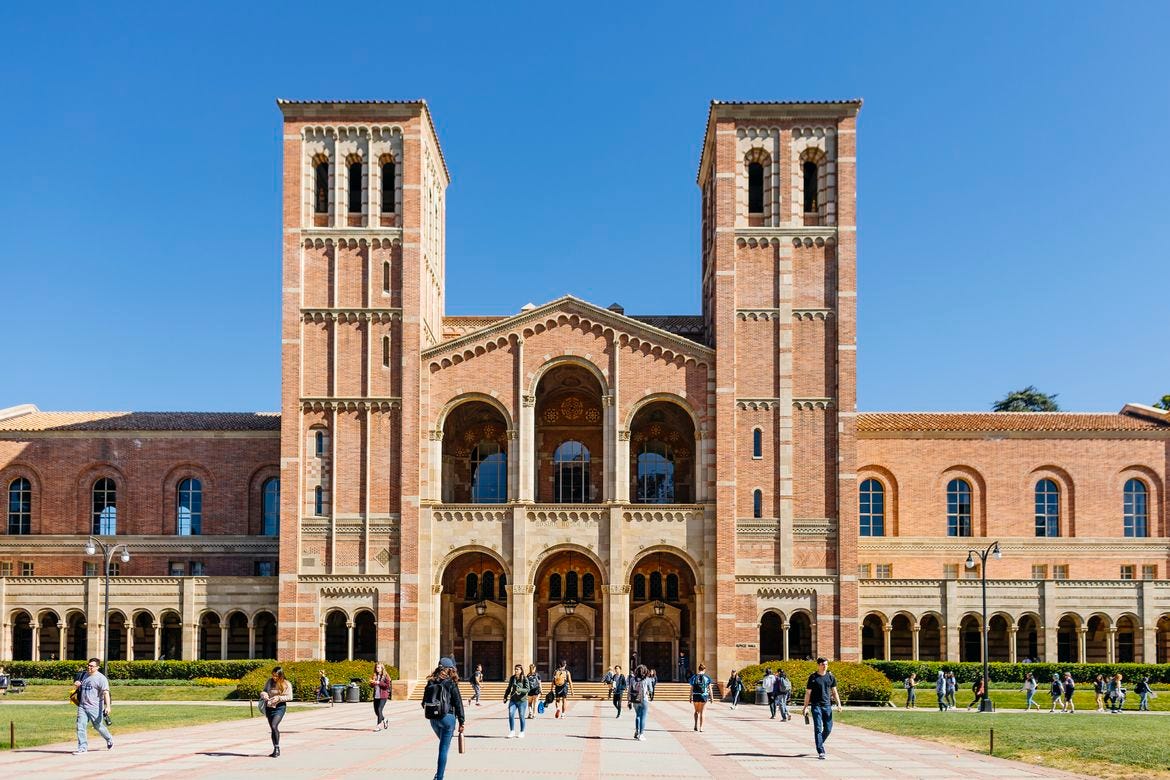
🗽 first impressions:
founded in 1919, ucla is one of the nation’s premier public research universities, known equally for academic excellence, innovation, and vibrant student life. nestled in westwood, los angeles, the campus offers sweeping views, striking architecture, and proximity to one of the world’s most dynamic cities. ucla’s expansive academic programs, cultural diversity, and storied athletic tradition make it a magnet for students seeking both intellectual rigor and the energy of southern california.
⭐ rating factors:
campus vibe: dynamic, inclusive, and forward-thinking; ucla students balance scholarly pursuits with activism, creativity, and a strong sense of community pride.
academics: highly ranked across fields—from life sciences and engineering to film, business, and public health—supported by a commitment to interdisciplinary research and hands-on learning.
student life: bustling and multifaceted; over 1,000 clubs and organizations allow students to explore cultural, artistic, service-oriented, and leadership interests.
location: situated in west los angeles, the campus offers close access to cultural institutions, entertainment, beaches, tech hubs, and internship opportunities throughout greater la.
cost of living: high, given west la’s competitive housing market, though the university’s robust financial aid and relatively affordable in-state tuition help mitigate expenses for many students.
🎉 cool events/traditions:
the varsity show: an annual student-produced performance that combines satire and musical numbers, reflecting life at ucla.
ucla/usc rivalry: the storied athletic rivalry—especially the football game for the victory bell—is one of the most anticipated events each fall.
spring sing: a celebrated tradition since 1945, where students showcase musical, comedic, and dance performances, often judged by celebrity alumni.
💡 core school values:
access and opportunity: rooted in the uc system’s mission, ucla is dedicated to expanding educational access and fostering upward mobility for students from diverse backgrounds.
innovation and research: as a top-tier research university, ucla emphasizes discovery, creativity, and translating ideas into real-world impact.
community engagement: students and faculty actively collaborate with the broader los angeles community through service projects, public health initiatives, and cultural programming.
🎓 program highlights:
anderson school of management: highly regarded for entrepreneurship, technology management, and social impact.
school of theater, film and television: internationally recognized for film production, screenwriting, and critical studies.
henry samueli school of engineering and applied science: renowned for research in computer science, bioengineering, and sustainable energy.
fielding school of public health: leading programs addressing global and community health challenges.
🎯 did you know?
ucla consistently sends more students abroad than any other uc campus and is the alma mater of over 250 olympic medalists, making it a powerhouse in both academics and athletics.
***special note: we are NOT sponsored or affiliated with any organizations, corporations, or schools highlighted in the above content. mention of any of the aforementioned groups is not representative of an advertisement or any sort of recommendation.***